
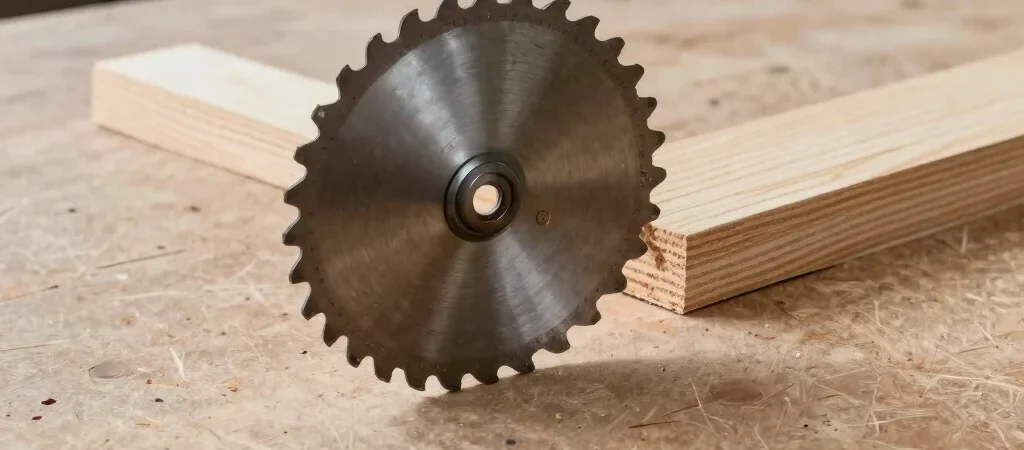
A fresh sheet of plywood can look rough around the edges after a cut, even when your saw is set up correctly. Before blaming your technique, check the blade: tooth count, blade condition, and compatibility with the saw all affect the cut you get.
Read the Job First
For quick cuts in framing lumber that will be hidden, a general-purpose blade can be a reasonable fit. When the edge will stay visible or the material is prone to splintering, a blade designed for a cleaner finish may be worth considering, though it can cut more slowly.
Tooth count is a useful starting clue, not the whole decision. Blades with more teeth are commonly chosen for smoother cuts, while fewer teeth tend to favor faster, rougher cutting; the tooth geometry and the material also matter. Check the blade maker’s guidance for the material you plan to cut.
Check Fit and Condition
Before comparing blade features, confirm the diameter and arbor fit your saw and that the blade is intended for its speed and use. A blade that does not match the saw’s specifications is not a bargain. Consult the saw manual if you are unsure, and disconnect power before changing a blade.
A dull or damaged blade can leave a poor cut and make the tool harder to control. If you see missing teeth, warping, or damage, stop using it and replace it with a compatible blade. Keep the work supported and follow the saw manufacturer’s safety instructions; a nicer finish is not worth an unstable cut.
Spend for Visible Edges
If you’re cutting hidden framing, prioritize a compatible blade suited to that material rather than paying for a finish you won’t see. For cabinet panels or other visible plywood edges, consider a blade intended for cleaner cuts and test it on an offcut before committing to the finished piece. A sacrificial backing board and careful support can also help reduce tear-out.
Some links in this guide may earn Ted Plans DIY a commission. Compare the blade specifications against your saw manual and project material first; the most useful upgrade is the one that improves the cut you actually need.


